Introduction
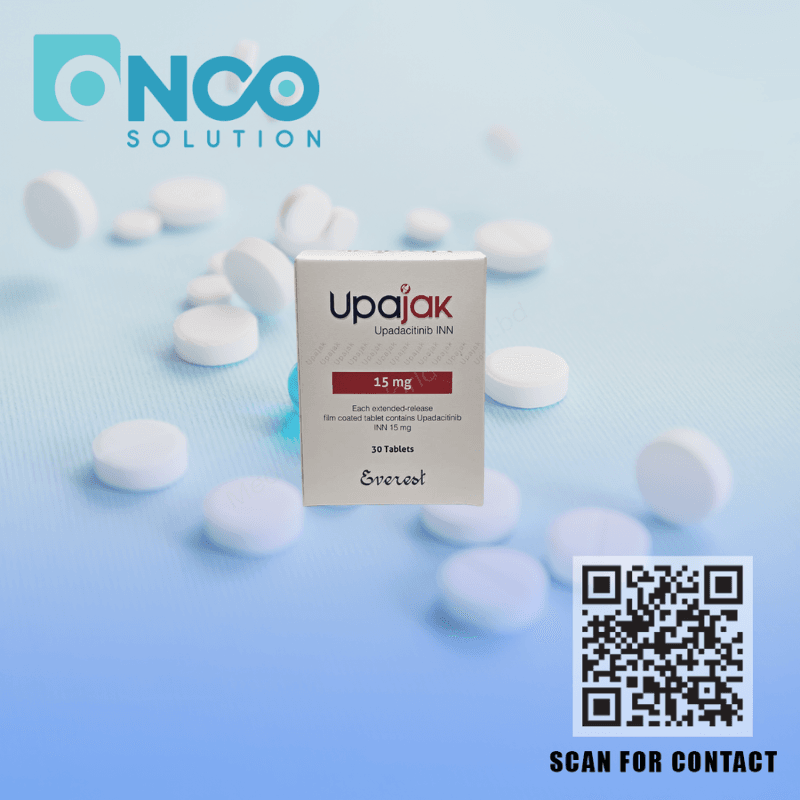
Upajaf 15 mg (Upadacitinib) is a next-generation, oral, targeted immunomodulatory medication classified as a highly selective Janus kinase (JAK) inhibitor. Manufactured by Everest Pharmaceuticals Ltd. and supplied globally by Onco Solution, Upajaf represents a breakthrough in the treatment of chronic, progressive autoimmune and inflammatory conditions. By selectively blocking specific intracellular pathways that trigger systemic inflammation, it delivers deep clinical remission and tissue healing for patients who have shown an inadequate response or intolerance to traditional systemic therapies or tumor necrosis factor (TNF) blockers.
Indications
Upajaf 15 mg (Upadacitinib) is indicated for the treatment of:
- Rheumatoid Arthritis (RA): Moderately to severely active RA in adults who have responded poorly to one or more TNF blockers.
- Psoriatic Arthritis (PsA): Active PsA in adult patients with inadequate responses to standard disease-modifying antirheumatic drugs (DMARDs).
- Ankylosing Spondylitis (AS) & Non-radiographic Axial Spondyloarthritis (nr-axSpA): Active axial spondyloarthritis with objective signs of inflammation.
- Atopic Dermatitis (AD): Refractory, moderate-to-severe eczema in adults and adolescents aged 12 years and older (weighing at least 40 kg) when other systemic treatments are inadvisable or ineffective.
- Gastrointestinal Inflammation (Maintenance): Long-term maintenance therapy for adults with moderately to severely active Ulcerative Colitis (UC) or Crohn’s Disease (CD) following an initial high-dose induction phase.
- Giant Cell Arteritis (GCA): Adult patients with active GCA, typically paired with a tapering course of corticosteroids.
Pharmacology
Upadacitinib, the active ingredient in Upajaf, is a second-generation, small-molecule inhibitor that displays a significantly higher potency for the JAK1 enzyme isoform over JAK2, JAK3, and TYK2.
- Mechanism of Action: Janus kinases are intracellular enzymes that bind to cytokine receptors on cell membranes, transmitting immune signaling pathways (JAK-STAT). Hyperactivation of this pathway drives chronic inflammation.
- Cellular Effect: By selectively binding to JAK1, Upajaf prevents the phosphorylation and subsequent activation of Signal Transducers and Activators of Transcription (STATs). This effectively shuts down the transcription of pro-inflammatory genes, dampening the immune overreaction at its cellular root.
Dosage & Administration
Oral Administration for Adults and Adolescents (12+):
- Standard Dosing: 15 mg taken orally once daily.
- Administration: Tablets should be swallowed whole with water. Do not split, crush, chew, or dissolve the tablet, as it is formulated for extended-release delivery. Can be taken with or without food.
- Missed Dose: If a dose is missed, take it as soon as remembered on the same day. If the missed dose is not noticed until the following day, skip it entirely and resume the normal once-daily schedule. Never double the dose.
Drug Interactions
- Strong CYP3A4 Inhibitors: Medications like ketoconazole or clarithromycin increase upadacitinib systemic exposure, elevating toxicity risks. Use with caution.
- Strong CYP3A4 Inducers: Co-administration with strong inducers (e.g., Rifampin, Phenytoin) significantly reduces upadacitinib plasma levels, drastically diminishing the drug’s therapeutic efficacy. Concomitant use is not recommended.
- Immunosuppressives/Biologics: Avoid using Upajaf in combination with other potent immunosuppressants (like azathioprine or cyclosporine) or biological DMARDs due to an increased risk of severe immunosuppression.
Contraindications
- Active Serious Infections: Must not be initiated in patients with severe, active systemic infections, including active tuberculosis (TB) or localized sepsis.
- Severe Hepatic Impairment: Contraindicated in patients with severely compromised liver function (Child-Pugh Class C).
- Hypersensitivity: Known severe allergic reaction to Upadacitinib or any structural components inside the tablet core.
Side Effects
Patients receiving Upajaf 15 mg may experience:
- Respiratory: Upper respiratory tract infections (common cold, sinusitis), bronchitis, and cough.
- Dermatological: Acne, folliculitis (redness/crusting around hair follicles), and mild skin rashes.
- Gastrointestinal: Nausea, abdominal pain, and minor digestive discomfort.
- Laboratory Alterations: Increased blood lipids (cholesterol), elevated liver enzymes (ALT/AST), and transient decreases in absolute lymphocyte or neutrophil counts.
Pregnancy & Lactation
- Pregnancy: Based on animal reproductive data, upadacitinib can cause embryonic or fetal harm. Females of reproductive potential must verify a negative pregnancy status before initiation and use highly effective contraception during treatment and for at least 4 weeks after the final dose.
- Lactation: It is unknown if the drug is excreted in human breast milk. Due to potential risks to the infant, breastfeeding is not recommended during therapy and for 6 days after the final dose.
Precautions & Warnings
- Serious Infections: JAK inhibitors can lower the body’s ability to fight infections. Patients must be screened for latent tuberculosis (TB) and viral hepatitis before starting therapy. Monitor closely for signs of active infection (fever, chills, persistent cough).
- Malignancies: Lymphoma and other malignancies have been reported in patients treated with JAK inhibitors. Consider the clinical risk-benefit profile in patients with a history of or active malignancy.
- Thrombosis: Deep vein thrombosis (DVT), pulmonary embolism (PE), and arterial thrombosis have occurred. Use with extreme caution in patients at higher risk for thromboembolic events.
- Gastrointestinal Perforations: Use with caution in patients with a history of diverticulitis or intestinal ulcerations.
- Live Vaccines: Avoid the administration of live vaccines immediately prior to or during Upajaf therapy.
Use in Special Populations
- Geriatric Use (Aged 65+): While the 15 mg dose is well-tolerated, elderly patients should be monitored closely for an increased incidence of serious infections or cardiovascular events.
- Renal Impairment: No dose adjustment is needed for mild or moderate renal impairment. For patients with severe renal impairment (eGFR 15 to less than 30 mL/min), a maximum dose of 15 mg daily is recommended.
Overdose Effects
In the event of an accidental overdose, the patient should be closely monitored by a healthcare provider for signs of profound myelosuppression (infection or bleeding risks) and advanced gastrointestinal distress. Treatment is strictly symptomatic and supportive.
Storage
- Condition: Store at controlled room temperature (15°C to 30°C).
- Protection: Store in the original moisture-resistant blister packaging. Keep the container tightly sealed to protect the tablets from excessive heat and direct sunlight. Keep safely away from children.
Supplier Information
Onco Solution is a premium global pharmaceutical distributor committed to making advanced, high-tech therapies accessible to clinics and patients worldwide. We ensure secure, fully compliant supply lines for life-saving generic medications like Upajaf 15 mg. For global quotes, validation data, or shipping inquiries, please visit www.oncosolution.com.
Manufacturer Information
Upajaf 15 mg is manufactured under strict cGMP conditions by Everest Pharmaceuticals Ltd., a premier pharmaceutical manufacturer in Bangladesh renowned for its specialized generic oncology and advanced immunomodulatory product pipelines.