
Last Updated: June 2026
Published by: oncosolution — a specialist oncology medicine supplier serving patients, pharmacies, and distributors worldwide.
Medical Review: Reviewed by Dr. Farhan Hossain, MBBS, MD (Oncology)
Content Basis: This article is based on official prescribing information, product monographs, and regulatory product documentation from the FDA, EMA, and DGDA (Directorate General of Drug Administration, Bangladesh).
Sources: accessdata.fda.gov, accessdata.fda.gov, oncosolution.com
Enzalutamide is a targeted androgen receptor inhibitor used to treat metastatic castration-resistant prostate cancer. It works by blocking androgen signalling, slowing tumour growth at a cellular level. European oncologists and procurement teams increasingly rely on this medication as a cornerstone treatment for advanced prostate cancer patients. This content is based on official prescribing information and regulatory documentation from the U.S. Food and Drug Administration (FDA) and the European Medicines Agency (EMA).
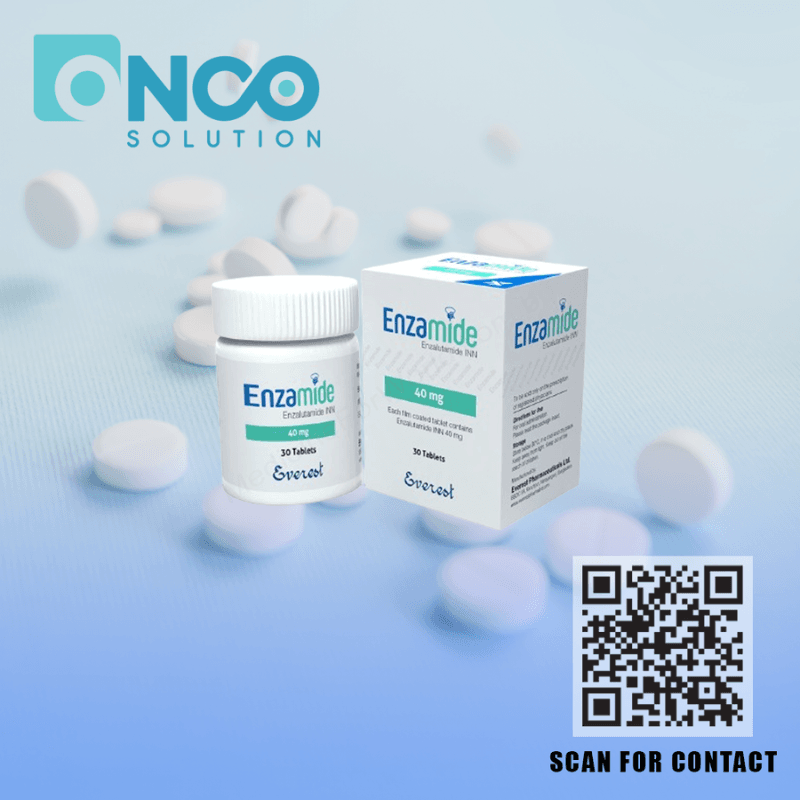
This treatment is available through our supply chain as Enzamide, manufactured by Everest Pharmaceuticals Ltd. in Bangladesh. Each 40 mg soft gelatin capsule delivers a precisely formulated dose, supporting consistent clinical outcomes. Additionally, Bangladeshi-manufactured generics offer European B2B buyers a quality-assured, cost-competitive alternative for enzalutamide prostate cancer treatment protocols.
Therefore, procurement teams seeking reliable, documented supply of this medication will find our sourcing model straightforward and compliant. We supply only Bangladeshi-manufactured brands, ensuring full traceability from manufacturer to buyer. Contact us to discuss volume requirements, documentation, and delivery timelines for Enzamide across European markets.
Key Takeaways
- Enzalutamide is an androgen receptor inhibitor used to treat metastatic castration-resistant prostate cancer. It comes as 40 mg oral soft gelatin capsules.
- The medication has a half-life of 5.8 days, meaning it takes about a week for the body to eliminate half of each dose.
- Enzalutamide can reduce the effectiveness of warfarin and other drugs processed by CYP2C9 enzymes. If you take warfarin, your doctor will need to monitor your INR levels more frequently.
- There is a risk of seizures with enzalutamide, particularly at higher doses.
What Is Enzalutamide and How Does It Work?
Enzalutamide is a targeted oral therapy classified as an androgen receptor inhibitor. It belongs to the antiandrogen therapeutic class and is specifically approved for metastatic castration-resistant prostate cancer (mCRPC). This treatment addresses a critical challenge: prostate cancer cells that continue to grow despite low testosterone levels. The mechanism of action and clinical pharmacology described here are derived from official product monographs reviewed by regulatory authorities including the FDA and EMA.
Mechanism of Action
Enzalutamide works by directly blocking androgen receptor signalling pathways within prostate cancer cells. Androgens — male hormones like testosterone — normally bind to receptors inside cancer cells. This binding triggers signals that drive tumour growth and proliferation.
This medication interferes with that process at multiple points. It prevents androgens from binding to their receptors. Additionally, it blocks the receptor from entering the cell nucleus, stopping it from activating cancer-promoting genes. Therefore, even when low levels of androgens are present, the treatment effectively disrupts their ability to fuel tumour progression. This multi-step inhibition mechanism has been validated through preclinical and clinical studies documented in regulatory submissions.
Clinical Significance in mCRPC
For patients with enzalutamide prostate cancer treatment needs, this mechanism is particularly important. Castration-resistant tumours have often developed resistance to hormone-deprivation therapies. Furthermore, by targeting the androgen receptor directly, this therapy offers a more comprehensive blockade compared to older antiandrogen agents. The result is measurable inhibition of cancer cell growth, making it a cornerstone treatment option in advanced prostate cancer management as recognized by international oncology guidelines.
Is Enzalutamide a Chemotherapy? Understanding Its Drug Class
A common question among patients and caregivers is whether Enzalutamide is a chemotherapy drug. The short answer is no. This medication belongs to an entirely different therapeutic category with a distinct mechanism of action, as classified by regulatory authorities worldwide.
How Enzalutamide Differs From Chemotherapy
Traditional chemotherapy works by killing rapidly dividing cells throughout the body. This approach affects both cancerous and healthy cells, often causing significant toxicity. Enzalutamide, however, does not function this way at all.
This treatment is classified as an androgen receptor inhibitor — a targeted antiandrogen therapy. It works by blocking androgen receptors that prostate cancer cells rely on to grow. Therefore, it specifically disrupts a hormonal signaling pathway rather than broadly destroying cells. This classification is consistent across FDA-approved labelling and EMA product information.
Drug Class: Androgen Receptor Inhibitor
The enzalutamide drug class — androgen receptor inhibitor — places it firmly within targeted hormonal therapies. This distinction matters clinically. The treatment’s mechanism is more precise than cytotoxic chemotherapy, targeting the androgen-driven growth cycle of metastatic castration-resistant prostate cancer cells. Furthermore, understanding this classification helps patients set realistic expectations about how the therapy works and differs from conventional cancer treatment approaches.
Available as Enzamide, this therapy represents a modern, mechanism-based approach to advanced prostate cancer management.
Approved Indication: Metastatic Castration-Resistant Prostate Cancer
Enzalutamide carries a well-established approval for treating metastatic castration-resistant prostate cancer (mCRPC) — an advanced stage where the disease continues progressing despite low testosterone levels. This indication represents a critical unmet need in oncology, affecting thousands of patients globally each year.
Regulatory Milestone: FDA Approval in 2012
The U.S. Food and Drug Administration granted approval for enzalutamide in August 2012, marking a significant advancement in prostate cancer treatment. This decision was supported by robust clinical evidence demonstrating meaningful survival benefits in the pivotal AFFIRM trial. The approval confirmed this therapy as a standard-of-care option for mCRPC patients who had previously received docetaxel chemotherapy.
Broader Regulatory Recognition
Beyond the United States, the European Medicines Agency (EMA) has independently evaluated this oncology treatment to ensure European patient access to effective therapies. The EMA granted marketing authorization in 2013, following comprehensive review of clinical trial data. Such multi-regional regulatory review reflects the global clinical importance of enzalutamide prostate cancer treatment. These approvals collectively reinforce the treatment’s credibility across major healthcare systems and provide the regulatory foundation for clinical use.
Availability Through Bangladeshi Supply
Enzamide is the Bangladeshi-manufactured brand of this medication, produced by Everest Pharmaceuticals Ltd., available through our supply chain. Therefore, patients and institutions requiring a verified, locally produced source can access this treatment reliably. Our sourcing focuses exclusively on quality-assured Bangladeshi brands that meet international pharmaceutical manufacturing standards.
Enzalutamide Dosage Forms and Administration
Available Formulation
Enzalutamide is supplied as 40 mg liquid-filled soft gelatin capsules intended for oral administration. Each capsule contains the active ingredient dissolved in caprylocaproyl polyoxylglycerides, ensuring consistent drug delivery. The formulation is notably practically insoluble in water, making the lipid-based capsule matrix essential for reliable absorption. This formulation design is documented in official prescribing information approved by regulatory authorities.
Pharmacokinetic Profile
This medication has a plasma half-life of approximately 5.8 days (ranging from 2.8 to 10.2 days), supporting once-daily dosing for metastatic castration-resistant prostate cancer. A prolonged half-life helps maintain stable plasma concentrations between doses. Therefore, adherence to a consistent daily schedule is clinically important for sustained therapeutic effect. The pharmacokinetic parameters have been characterized through clinical pharmacology studies submitted to regulatory agencies.
Seizure Risk at Escalating Doses
No seizures were reported at or below 240 mg daily in dose-escalation studies conducted during clinical development. However, seizure events were documented at 360 mg, 480 mg, and 600 mg daily doses. Additionally, this treatment may reduce plasma exposures of CYP2C9 substrates such as warfarin; additional INR monitoring is recommended when co-administered, as specified in official drug interaction warnings. Prescribers should carefully evaluate each patient’s seizure history before initiating or escalating the dosage, in accordance with prescribing guidelines.
Supplied Brand
Enzamide, the Bangladeshi-manufactured brand of this androgen receptor inhibitor produced by Everest Pharmaceuticals Ltd., is available through our supply network for institutional and clinical procurement needs.
Common Side Effects and Safety Considerations for Enzalutamide
Understanding the safety profile of Enzalutamide is essential for both clinicians and patients managing metastatic castration-resistant prostate cancer. This medication carries specific risks that require careful monitoring throughout treatment. The safety information presented here is derived from clinical trial data and post-marketing surveillance reports reviewed by the FDA and EMA.
Seizure Risk at Elevated Doses
One of the most clinically significant concerns involves seizure activity at higher dose levels. No seizures were reported below the 240 mg daily threshold in dose escalation studies. However, seizures were documented at 360 mg, 480 mg, and 600 mg daily doses during clinical development. Therefore, prescribers must carefully evaluate each patient’s seizure history before initiating or escalating therapy. This dose-dependent risk is clearly documented in the official prescribing information and represents an important safety consideration for treatment planning.
Drug Interactions: CYP2C9 and Warfarin
This treatment can decrease plasma exposures of CYP2C9 substrates, with warfarin being a well-documented example in drug interaction studies. Concurrent administration may reduce warfarin’s effectiveness, increasing thromboembolic risk. Additional INR monitoring is strongly recommended whenever this therapy is co-administered with warfarin or similar anticoagulants, as specified in regulatory-approved labelling. Furthermore, clinicians should review the patient’s full medication list for other CYP2C9-dependent drugs before starting treatment. This interaction has been characterized through clinical pharmacology studies and is consistently highlighted in official product information.
General Safety Summary
The long half-life of 5.8 days means that drug interactions and side effects may persist well beyond a missed dose. Additionally, because enzalutamide prostate cancer therapy is typically long-term, ongoing safety assessments remain critical. Patients and caregivers should be educated on early warning signs, particularly neurological symptoms, to ensure prompt clinical response. Healthcare providers should consult the complete prescribing information for a comprehensive list of adverse reactions, warnings, and precautions based on clinical trial experience and post-marketing data.
Enzalutamide in the European Market: Regulatory Context
How Regulatory Agencies Shape Access to This Therapy
The European Medicines Agency (EMA) serves as the central body evaluating oncology drugs for European Union markets. Any treatment seeking broad European access must undergo rigorous EMA scientific review. This process ensures consistent safety and efficacy standards across member states. The EMA’s Committee for Medicinal Products for Human Use (CHMP) conducts comprehensive assessment of clinical data, manufacturing quality, and risk-benefit profiles before issuing marketing authorization.
Global Regulatory History and the FDA Milestone
Enzalutamide received FDA approval in August 2012 for metastatic castration-resistant prostate cancer, establishing a critical foundation in global regulatory history. This approval demonstrated strong clinical evidence supporting the therapy’s role in oncology, based on the pivotal AFFIRM trial. International regulators frequently reference FDA decisions when assessing comparable submissions. The EMA subsequently granted marketing authorization in June 2013, following independent evaluation of the same clinical evidence. This sequential approval pattern reflects the coordinated global regulatory framework for oncology medicines.
Verifying Local National Authority Status
European approval status can vary significantly between individual national authorities. Therefore, healthcare professionals and procurement teams must verify current approval status with their respective national regulatory bodies before prescribing or sourcing. Additionally, approval timelines differ from country to country, even within the EU framework. Confirming local authorization protects both clinical and compliance integrity. National competent authorities may impose specific conditions or restrictions beyond the centralized EMA authorization.
Sourcing Considerations for Healthcare Buyers
For institutions requiring reliable supply of this medication, Enzamide — a Bangladeshi-manufactured brand produced by Everest Pharmaceuticals Ltd. — offers a quality-focused alternative within international procurement frameworks. Buyers should align sourcing decisions with verified regulatory standing in their jurisdiction and ensure compliance with pharmaceutical import regulations.
How Long Does Enzalutamide Extend Life? Clinical Outcomes Overview
Enzalutamide has demonstrated meaningful improvements in both progression-free and overall survival in patients with metastatic castration-resistant prostate cancer (mCRPC). These outcomes are not theoretical — they are grounded in robust phase III clinical trial data that directly supported regulatory approval by the FDA and EMA.
Clinical Trial Evidence Behind the Approval
The FDA approval of this medication rests on the landmark AFFIRM trial involving men with advanced mCRPC who had previously received docetaxel chemotherapy. Trial results consistently showed that the treatment delayed disease progression compared to placebo. Furthermore, overall survival benefits were statistically significant: enzalutamide demonstrated a median overall survival of 18.4 months compared to 13.6 months with placebo, representing a 4.8-month improvement. This survival advantage was a key factor in the regulatory decision and has been documented in peer-reviewed medical literature.
Indicated for Advanced mCRPC
This therapy is specifically indicated for the advanced stage of metastatic castration-resistant prostate cancer. Patients at this stage have limited treatment alternatives, making survival extension especially meaningful. The clinical data positions enzalutamide prostate cancer therapy as a standard-of-care option for oncologists managing this condition, as reflected in international treatment guidelines from organizations such as the European Association of Urology and the American Society of Clinical Oncology.
What Survival Extension Means in Practice
Survival extension with this treatment translates to more months of maintained quality of life for patients. Additionally, delaying radiographic progression reduces the burden of disease-related complications. Therefore, the clinical value extends beyond survival statistics alone — it encompasses functional patient outcomes as well. The AFFIRM trial also demonstrated improvements in secondary endpoints including time to PSA progression and radiographic progression-free survival, providing comprehensive evidence of clinical benefit.
Sourcing Enzamide: B2B Supply for European Pharmaceutical Buyers
Enzamide, a Bangladeshi-manufactured enzalutamide formulation produced by Everest Pharmaceuticals Ltd., is available for international B2B procurement through established supply channels serving European pharmaceutical buyers. This treatment addresses a critical oncology need — metastatic castration-resistant prostate cancer — making reliable, uninterrupted supply a priority for distributors and hospital procurement teams alike.
Manufactured in Bangladesh for Global Reach
Enzamide is supplied by Everest Pharmaceuticals Ltd., a Bangladeshi pharmaceutical manufacturer with demonstrated international export capability. The company operates within Bangladesh’s regulated pharmaceutical sector, which has established a track record of supplying quality oncology medicines to markets worldwide. Everest Pharmaceuticals maintains manufacturing facilities that comply with Good Manufacturing Practice (GMP) standards, ensuring product quality and consistency. European buyers benefit from a dependable manufacturing source outside traditional high-cost production regions.
Supply Compatibility with European Import Standards
Procurement of this enzalutamide prostate cancer therapy into European markets requires adherence to EU import documentation, batch certification, and product dossier requirements. Everest Pharmaceuticals maintains supply processes aligned with these international compliance expectations. Furthermore, consistent batch availability supports the forward-planning demands of European hospital pharmacies and specialty distributors. Each shipment is accompanied by certificates of analysis and regulatory documentation to facilitate customs clearance and quality verification.
Why European Buyers Choose Bangladeshi-Sourced Oncology Medicines
Diversifying the oncology supply chain reduces dependency on single-market sources. Enzamide represents a strategically viable option for European buyers seeking a quality-assured, internationally supplied androgen receptor inhibitor. Additionally, structured procurement agreements can support volume commitments and documentation workflows specific to each destination market. Bangladesh’s pharmaceutical industry has gained recognition for producing affordable, quality-assured generic medicines that meet international standards, making it an increasingly important source for global healthcare procurement.
Frequently Asked Questions About Enzalutamide
Is Enzalutamide a Form of Chemotherapy?
No. Enzalutamide is not chemotherapy. It belongs to the androgen receptor inhibitor class, specifically classified as an antiandrogen according to FDA and EMA approved labelling. This medication works by blocking androgen receptors rather than destroying cells like traditional chemotherapy. Therefore, its mechanism and side effect profile differ significantly from cytotoxic agents used in cancer treatment.
Does This Treatment Carry a Seizure Risk?
Yes, a dose-dependent seizure risk exists with this therapy, as documented in clinical trial safety data. Importantly, no seizures were reported below 240 mg daily in dose escalation studies. However, seizures were documented at doses of 360 mg, 480 mg, and 600 mg daily. Patients should discuss their full medical history with their physician before starting treatment, particularly any prior seizure conditions. This safety information is prominently featured in official prescribing information.
How Can I Inquire About Availability of Enzamide?
For procurement inquiries regarding Enzamide, manufactured by Everest Pharmaceuticals Ltd. in Bangladesh, our supplied brand for metastatic castration-resistant prostate cancer, please reach out directly to our sourcing team. We provide verified availability information and sourcing details to support healthcare providers and distributors efficiently.
Additional Questions & Answers
Is enzalutamide a chemotherapy?
No, enzalutamide is not a chemotherapy drug. Instead, it belongs to a class called androgen receptor inhibitors, which work by blocking male hormone signals that fuel prostate cancer growth. This makes it a targeted hormonal treatment rather than a traditional cytotoxic chemotherapy. This classification is consistent across regulatory approvals from the FDA and EMA.
How does enzalutamide work against metastatic castration-resistant prostate cancer?
This medication works by blocking androgen receptors on prostate cancer cells. Androgens, such as testosterone, normally bind to these receptors and stimulate tumour growth. By inhibiting this process at multiple steps—preventing receptor binding, nuclear translocation, and DNA interaction—the treatment helps slow the progression of metastatic castration-resistant prostate cancer. This mechanism of action has been validated through preclinical and clinical studies documented in regulatory submissions.
What are the common side effects of enzalutamide?
Patients taking this medication should be aware of a risk of seizures, particularly at higher daily doses. Clinical trial data shows no seizures were reported below 240 mg daily, but seizures occurred at 360 mg and higher doses. There is also an important drug interaction to note: it may reduce the effectiveness of blood-thinning medications such as warfarin, so additional INR monitoring is recommended if both are used together. Always discuss any concerns with your prescribing physician before starting treatment. Complete safety information is available in the official prescribing information approved by regulatory authorities.
How can patients access enzalutamide treatment?
This treatment is available as 40 mg liquid-filled soft gelatin capsules taken orally. Patients should obtain it through a licensed healthcare provider or specialist oncologist who can confirm the appropriate indication. Enzamide, manufactured by Everest Pharmaceuticals Ltd. in Bangladesh, is one available brand that may be sourced through authorised pharmaceutical suppliers. Prescribing must be in accordance with local regulatory approval status.
How can healthcare providers or institutions source enzalutamide?
We supply Bangladeshi-manufactured enzalutamide, including the brand Enzamide by Everest Pharmaceuticals Ltd. Procurement enquiries can be directed to our sourcing team, who handle institutional and bulk orders. All supplies are fulfilled in compliance with applicable pharmaceutical import and distribution regulations. We provide full documentation including certificates of analysis and regulatory compliance certificates.
What documentation is required to procure enzalutamide?
Procurement of enzalutamide typically requires a valid import licence, a purchase order from a licensed medical institution or pharmacy, and relevant end-user certificates. Depending on the destination country, additional regulatory permits may be needed to authorise the importation of oncology medications. Our team can guide buyers through the required documentation process for a compliant transaction, ensuring all shipments meet customs and pharmaceutical regulatory requirements.
References and Regulatory Sources
This article is based on official prescribing information, regulatory documentation, and clinical trial data from the following authoritative sources:
- U.S. Food and Drug Administration (FDA). Enzalutamide prescribing information and approval documentation. FDA Drug Approval Package
- European Medicines Agency (EMA). Enzalutamide assessment reports and product information. EMA Product Information
- Scher HI, et al. Increased survival with enzalutamide in prostate cancer after chemotherapy. N Engl J Med. 2012;367(13):1187-1197. (AFFIRM trial)
- National Comprehensive Cancer Network (NCCN). Clinical Practice Guidelines in Oncology: Prostate Cancer.
Access This Medicine Through oncosolution
We are a specialist oncology medicine supplier delivering to patients, pharmacies, hospitals, and distributors worldwide. Contact us for availability and sourcing support.
We do not publish prices online. All pricing is provided directly by our specialist supply team on request.
Medical Information Notice: This content is for informational purposes only and is based on official pharmaceutical product documentation. It does not constitute medical advice. Patients should consult their doctor or pharmacist before taking any medication.
Regulatory Disclaimer: Sourcing and distribution are subject to regional import regulations, quotas, and verified medical prescriptions where applicable. Pricing and availability are subject to change without notice.
Content Currency: This article was last reviewed and updated in June 2026. Regulatory approval statuses and product availability are subject to change; readers are advised to consult official regulatory databases for the most current information.