
Last Updated: July 2026
Published by: oncosolution — a specialist oncology medicine supplier serving patients, pharmacies, and distributors worldwide.
Medical Review: Reviewed by Dr. Nusrat Jahan, MBBS, MD (Medical Oncology)
Content Basis: This article is based on official prescribing information, product monographs, and regulatory product documentation from CDSCO and DGDA (Directorate General of Drug Administration, Bangladesh).
Sources: accessdata.fda.gov, accessdata.fda.gov, accessdata.fda.gov, ema.europa.eu, my.clevelandclinic.org, drugs.com
Key Takeaways
- Niraparib is an oral PARP inhibitor approved for adult patients (18 years and older) for the maintenance treatment of advanced epithelial ovarian, fallopian tube, or primary peritoneal cancer in patients who are in complete or partial response to platinum-based chemotherapy.
- It works by blocking PARP-1 and PARP-2 enzymes, exploiting the concept of synthetic lethality in tumors with homologous recombination deficiency or BRCA mutations, where cancer cells lose all ability to repair DNA double-strand breaks.
- Niraparib tablets are available in three strengths — 100 mg, 200 mg, and 300 mg — with all dosing decisions, including strength selection and any modifications, determined exclusively by the treating oncologist.
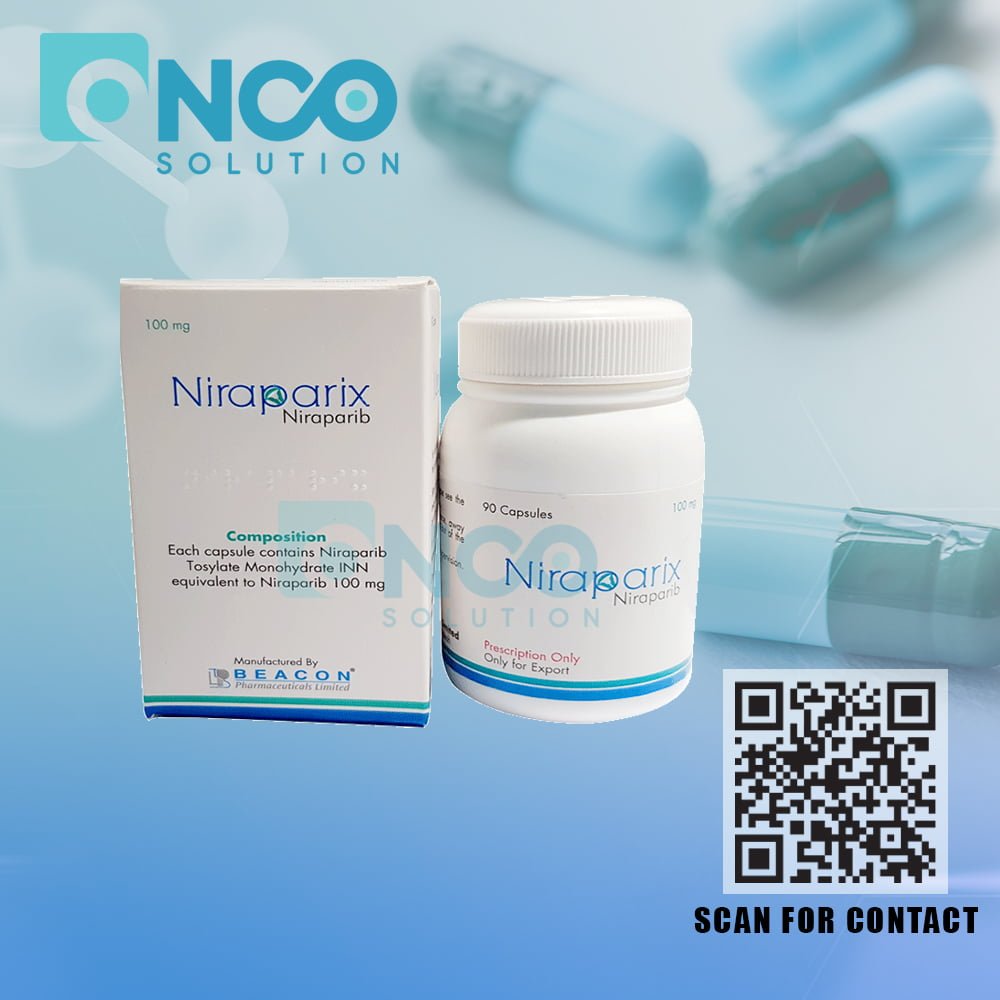
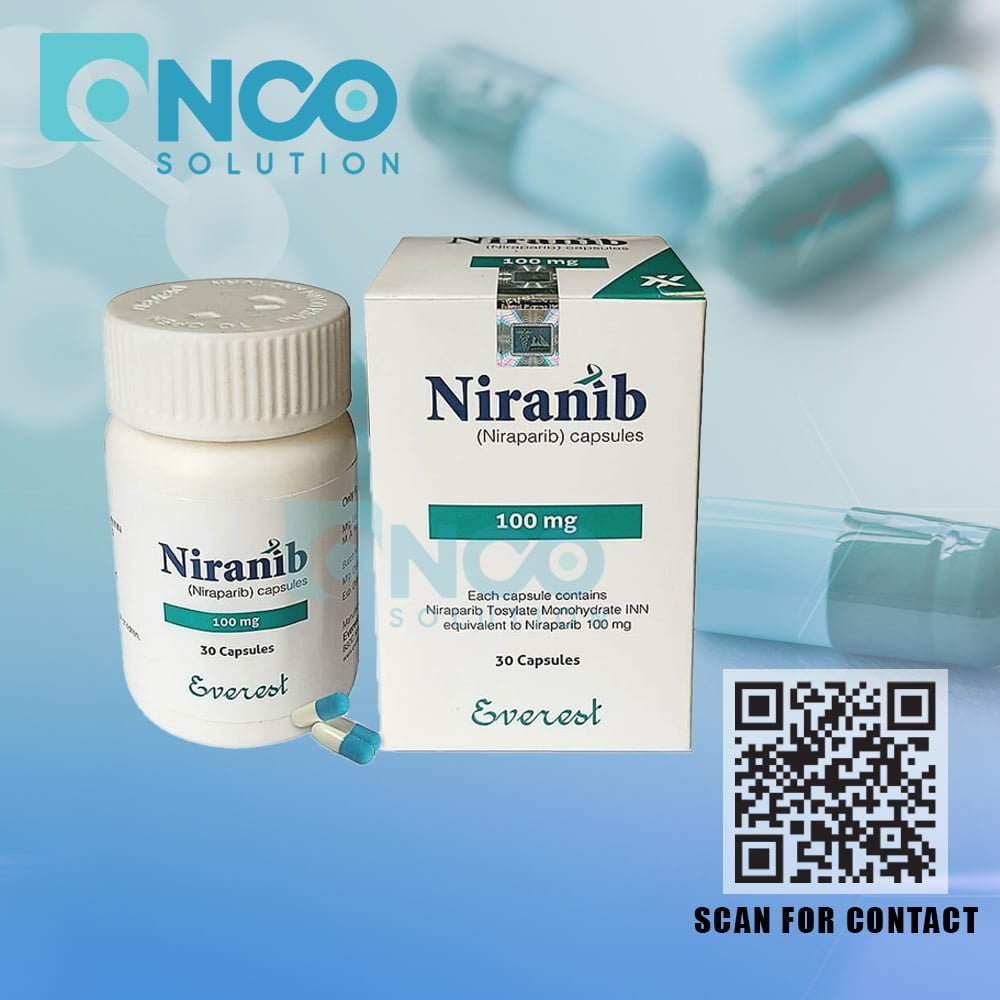
- We export two Bangladeshi-manufactured niraparib brands to India — Niranib (Everest Pharmaceutical Ltd.) and Niraparix (Beacon Pharmaceuticals Ltd.) — both available in all three tablet strengths and supplied through a dedicated B2B pharmaceutical export channel.
- Key safety considerations include serious risks such as myelodysplastic syndrome (MDS), acute myeloid leukemia (AML), and hypertensive crisis, alongside common reactions such as nausea, thrombocytopenia, and fatigue, all requiring active monitoring and physician oversight.
- Institutional buyers in India — including oncology hospitals, cancer treatment centers, and licensed wholesale distributors — should ensure compliance with applicable CDSCO import licensing and regulatory requirements before procuring these imported oncology medicines.
What Is Niraparib and What Conditions Does It Treat?
Niraparib is an oral antineoplastic agent belonging to the poly(ADP-ribose) polymerase (PARP) inhibitor class. It is approved for use in adult patients (18 years and older) across three distinct oncology indications, all within the spectrum of advanced epithelial ovarian, fallopian tube, or primary peritoneal cancer.
- First-line maintenance therapy: Niraparib is indicated for the maintenance treatment of adult patients with advanced epithelial ovarian, fallopian tube, or primary peritoneal cancer who have achieved a complete or partial response to first-line platinum-based chemotherapy and whose cancer is associated with homologous recombination deficiency (HRD)-positive status.
- Recurrent germline BRCA-mutated ovarian cancer: It is approved as maintenance treatment in adult patients with recurrent germline BRCA-mutated ovarian cancer who are in a complete or partial response to platinum-based chemotherapy.
- Heavily pretreated advanced ovarian cancer: Niraparib is also indicated for the treatment of advanced ovarian cancer in adult patients who have received three or more prior chemotherapy regimens and whose cancer is associated with homologous recombination deficiency positive status.
All three indications are approved for adults aged 18 years and older. Clinical evidence: The approval of niraparib across these indications is supported by clinical trials including the PRIMA study (a phase 3 RCT for first-line maintenance), the NOVA study (a phase 3 RCT for recurrent disease maintenance), and the QUADRA study (a phase 2 single-arm study for heavily pretreated patients with HRD-positive tumors), which demonstrated efficacy in the respective patient populations.
Procurement teams sourcing niraparib tablets for Indian oncology centers should ensure the indication aligns with the treating physician’s clinical assessment and that the prescribing oncologist has confirmed appropriate biomarker testing (HRD or BRCA mutation status) where indicated.
Mechanism of Action: How Niraparib Works
Niraparib functions as an inhibitor of poly(adenosine diphosphate [ADP]-ribose) polymerase (PARP) enzymes, specifically PARP-1 and PARP-2. These enzymes play a critical role in detecting and repairing single-strand DNA breaks within cells. By blocking PARP activity, niraparib prevents cancer cells from executing this repair pathway, leading to the accumulation of DNA damage and ultimately triggering cell death through apoptosis.
Scientific basis: This mechanism is particularly effective in tumors harboring homologous recombination deficiency (HRD) or germline BRCA mutations. In these cancer cells, the homologous recombination repair pathway—which normally repairs DNA double-strand breaks—is already compromised. When PARP-mediated single-strand break repair is simultaneously inhibited, cancer cells lose their ability to resolve DNA double-strand breaks through any pathway.
This phenomenon is known as synthetic lethality—a concept first described in preclinical research published in Nature (2005) demonstrating that PARP inhibition is selectively lethal to BRCA-deficient cells. Normal cells with intact DNA repair mechanisms retain functional homologous recombination and are comparatively less affected, providing a degree of tumor selectivity that underpins niraparib’s clinical utility in HRD-positive and BRCA-mutated ovarian cancers.
Clinical relevance: The selectivity of niraparib for HRD-positive tumors explains why biomarker testing for BRCA mutations and broader HRD status is an integral component of treatment decision-making in eligible patient populations. Oncologists should confirm appropriate molecular testing has been completed before initiating niraparib therapy.
Available Strengths and Dosage Forms
Niraparib is currently available in an oral tablet formulation in three strengths: 100 mg, 200 mg, and 300 mg. Each tablet strength represents an equivalent amount of niraparib tosylate monohydrate, the salt form used in manufacturing.
Formulation history: The tablet formulation received FDA approval in July 2023, representing a formulation update from the original capsule form that was first approved in March 2017. This transition to tablets was designed to improve patient convenience and dosing flexibility; however, studies have indicated that bioavailability may differ between formulations, with capsules potentially demonstrating higher bioavailability compared to tablets.
The tablet format offers practical advantages for oncology patients in terms of administration flexibility and ease of swallowing. Niraparib tablets are taken orally once daily, and all specific dosing decisions—including strength selection, frequency, and any modifications—are determined exclusively by the treating oncologist in accordance with the current official prescribing information.
Procurement guidance: Healthcare procurement teams and institutional pharmacies should stock all three tablet strengths to support individualized patient management, as dose modifications based on tolerability and patient-specific factors (body weight, baseline platelet count) are common in clinical practice.
Brands We Export to India: Niranib and Niraparix
We supply two Bangladeshi-manufactured niraparib tablet brands to the Indian market:
- Niranib (Everest Pharmaceutical Ltd., Bangladesh) — available in 100 mg, 200 mg, and 300 mg tablet strengths.
- Niraparix (Beacon Pharmaceuticals Ltd., Bangladesh) — available in 100 mg, 200 mg, and 300 mg tablet strengths.
Manufacturing standards: Both Everest Pharmaceutical Ltd. and Beacon Pharmaceuticals Ltd. are established pharmaceutical manufacturers in Bangladesh with WHO-GMP certified facilities and experience in oncology product manufacturing. Both brands are sourced exclusively from their respective Bangladeshi manufacturers and exported directly to institutional buyers in India through our verified supply chain.
Important clarification: These products are not Indian-manufactured brands; they are imported oncology medicines supplied through a dedicated pharmaceutical export channel. All products are manufactured in Bangladesh and imported into India in compliance with applicable regulatory requirements.
Supply structure: Our supply is structured for B2B procurement. Eligible buyers include oncology hospitals, cancer treatment centers, institutional pharmacies, and licensed wholesale distributors operating within India. For procurement teams evaluating niraparib tablets supplier options, both Niranib and Niraparix represent reliable, manufacturer-direct sourcing from Bangladesh with established quality assurance protocols.
Inquiries regarding availability, pack sizes, minimum order quantities, and order lead times are welcome through our contact channel. Our procurement team can provide detailed product specifications, certificates of analysis, and regulatory documentation to support institutional purchasing decisions.
For additional product-level detail on Niranib, refer to our Niranib 100 mg comprehensive guide.
Clinical Safety Profile: Side Effects and Monitoring Considerations
Niraparib carries a well-characterized adverse event profile documented across multiple phase 3 clinical trials involving over 2,000 patients. Prescribers and procurement teams should be familiar with this safety profile when supporting oncology programs.
Common Side Effects
Hematologic effects (very common): Thrombocytopenia (platelet count decrease), anemia (hemoglobin decrease), and neutropenia (white blood cell decrease) are among the most frequently reported adverse reactions, occurring in more than 50% of patients in clinical trials.
Gastrointestinal effects: Nausea (reported in approximately 65-75% of patients), constipation, vomiting, abdominal pain, and diarrhea are common and typically manageable with antiemetic therapy and supportive care.
Constitutional symptoms: Fatigue and asthenia (weakness) are frequently reported. Additional common reactions include headache, dizziness, insomnia, decreased appetite, and palpitations.
Cardiovascular effects: Hypertension occurs in approximately 20% of patients and requires regular blood pressure monitoring throughout treatment.
These events are generally manageable with supportive care, antiemetic prophylaxis, and dose modification under physician guidance. Most adverse reactions are reversible with dose interruption or reduction.
Serious Adverse Events
Myelodysplastic syndrome (MDS) and acute myeloid leukemia (AML): MDS/AML have been reported in patients treated with niraparib, occurring in less than 1.5% of patients in clinical trials. These are serious, potentially fatal conditions that have been observed with long-term PARP inhibitor use. The median duration to onset was approximately two years. Clinical implication: Patients should undergo regular complete blood count monitoring, and any persistent cytopenias should prompt evaluation for MDS/AML. Treatment should be discontinued if MDS/AML is confirmed.
Bone marrow suppression: Severe thrombocytopenia, neutropenia, and anemia can occur, with Grade 3 or 4 events reported in 28%, 13%, and 31% of patients respectively in the PRIMA trial. Febrile neutropenia and pancytopenia have also been documented.
Hypertensive crisis: Severe hypertension and hypertensive crisis have been reported in approximately 1% of patients. Blood pressure should be adequately controlled before initiating niraparib, and patients should be monitored at least weekly for the first two months, then monthly thereafter.
Posterior reversible encephalopathy syndrome (PRES): PRES is a rare but serious neurological disorder that has been reported with niraparib. Symptoms may include seizure, headache, altered mental status, visual disturbances, or cortical blindness, with or without associated hypertension. Diagnosis requires confirmation by brain imaging, preferably MRI. Niraparib should be discontinued if PRES is confirmed.
Cardiovascular events: In addition to hypertension, serious cardiovascular events including cardiac failure and myocardial infarction have been reported in post-marketing surveillance, though causality has not been definitively established.
Hypersensitivity reactions: Allergic reactions—including angioedema with potential difficulty breathing—have been documented and may require treatment discontinuation.
Other serious events: Seizures have been reported in less than 0.2% of patients. Serious bleeding events and significant bruising have also been documented, particularly in patients with concurrent thrombocytopenia.
Monitoring Requirements
Hematologic monitoring: Complete blood count (CBC) should be monitored weekly for the first month, monthly for the next 11 months, and periodically thereafter. Given the risk of MDS and AML, persistent cytopenias (lasting more than 4 weeks) should prompt referral to a hematologist for further investigation including bone marrow analysis and cytogenetic testing.
Blood pressure monitoring: Blood pressure should be measured at baseline, monitored at least weekly for the first two months of treatment, then monthly for the first year, and periodically thereafter. Patients with pre-existing hypertension should have their blood pressure well-controlled before starting niraparib.
Renal and hepatic function: While not specifically mandated in prescribing information, periodic monitoring of renal and hepatic function is advisable given the potential for dose adjustment in patients with moderate to severe impairment.
Pregnancy and Lactation Guidance
Pregnancy: Niraparib can cause fetal harm when administered to pregnant women based on its mechanism of action and findings in animal reproduction studies. Women of reproductive potential should be counseled not to become pregnant during niraparib treatment or for six months after stopping therapy. Females of reproductive potential should have a pregnancy test prior to initiating treatment and should use effective contraception during treatment and for six months following the last dose.
Male fertility: Male patients should be informed of the potential for lowered sperm counts, which may be irreversible. Men with female partners of reproductive potential should use effective contraception during treatment and for three months following the last dose.
Lactation: It is not known whether niraparib is present in human milk. Because of the potential for serious adverse reactions in breastfed infants, women are advised not to breastfeed during treatment and for one month after receiving the final dose.
Clinical oversight: This is a prescriber-managed oncology drug—all clinical decisions regarding monitoring frequency, dose modifications, and management of adverse events must reference the full current prescribing information and be made by qualified oncology specialists with experience in PARP inhibitor therapy.
Dose Adjustment and Patient-Specific Considerations
Niraparib therapy requires individualized dose selection and may necessitate dose modification based on several patient-specific factors and tolerability considerations.
Starting dose determination: Body weight and baseline platelet count are among the key parameters that inform starting strength selection. Clinical trial data from the PRIMA and NOVA studies demonstrated that individualized starting doses based on these parameters resulted in improved tolerability without compromising efficacy. Specifically, patients with body weight less than 77 kg or baseline platelet count less than 150,000/μL may benefit from a reduced starting dose.
Dose modifications during treatment: Tolerability of adverse reactions—particularly hematologic toxicities such as thrombocytopenia, neutropenia, and anemia—may necessitate dose interruption, dose reduction, or treatment discontinuation during the course of treatment. The prescribing information provides detailed guidance on dose modification based on the severity and duration of specific adverse events.
Special populations:
- Renal impairment: No dose adjustment is recommended for patients with mild to moderate renal impairment (creatinine clearance 30-89 mL/min). Niraparib has not been studied in patients with severe renal impairment or end-stage renal disease.
- Hepatic impairment: No dose adjustment is recommended for patients with mild hepatic impairment (total bilirubin ≤ upper limit of normal [ULN] and AST > ULN, or total bilirubin 1 to 1.5 × ULN and any AST). Niraparib has not been studied in patients with moderate to severe hepatic impairment.
- Geriatric patients: No overall differences in safety or effectiveness were observed between patients aged 65 years and older and younger patients, though greater sensitivity in some older individuals cannot be ruled out.
Clinical responsibility: No specific dosing amounts or regimens are detailed here, as all such decisions fall within the clinical responsibility of the treating oncologist. Physicians should consult the current official prescribing information to determine the appropriate tablet strength and any required modifications for each individual patient based on baseline characteristics, concurrent medications, and treatment tolerability.
Pharmacy preparedness: Institutional pharmacies supplying niraparib should maintain all three available tablet strengths—100 mg, 200 mg, and 300 mg—to support flexible, patient-tailored dosing and enable timely dose modifications without treatment interruption.
Regulatory Status: FDA, EMA, and CDSCO Context for India
Niraparib has received regulatory approval from multiple major international authorities, establishing its clinical acceptance in oncology practice:
- FDA (United States Food and Drug Administration): Niraparib received its initial FDA approval on in capsule form for the maintenance treatment of recurrent epithelial ovarian, fallopian tube, or primary peritoneal cancer in patients who are in complete or partial response to platinum-based chemotherapy. The approval was subsequently expanded to include first-line maintenance therapy in HRD-positive advanced ovarian cancer on . The tablet formulation received separate FDA approval on , providing an alternative dosage form with equivalent bioavailability.
- EMA (European Medicines Agency): Niraparib received EMA approval on for maintenance treatment of adult patients with platinum-sensitive relapsed high-grade serous epithelial ovarian, fallopian tube, or primary peritoneal cancer who are in response to platinum-based chemotherapy. The indication was expanded to include first-line maintenance therapy on .
- Other regulatory approvals: Niraparib has also received regulatory approval in multiple other jurisdictions including Health Canada, the UK MHRA, Swissmedic (Switzerland), and the Therapeutic Goods Administration (TGA) in Australia, among others.
Regulatory Context for India: CDSCO Requirements
For the Indian market, oncology drug imports are regulated by the Central Drugs Standard Control Organisation (CDSCO), the national regulatory authority for pharmaceuticals and medical devices in India, accessible at cdsco.gov.in.
Import licensing requirements: Hospitals, distributors, and institutional pharmacies procuring imported oncology medicines in India are required to comply with applicable CDSCO import licensing and regulatory requirements under the Drugs and Cosmetics Act, 1940 and Drugs and Cosmetics Rules, 1945. Specific requirements may include:
- Valid import license issued by the Drug Controller General of India (DCGI) or authorized state drug controller
- Registration of the imported product with CDSCO (where applicable)
- Compliance with labeling requirements under Indian regulations
- Certificate of Pharmaceutical Product (CoPP) or equivalent documentation from the country of origin
- Test reports and certificates of analysis demonstrating product quality
- Compliance with cold chain requirements for temperature-sensitive products (if applicable)
Product-specific context: Niranib and Niraparix, as Bangladeshi-manufactured niraparib tablet brands, are positioned as import-eligible products for institutional procurement in India. Both products are manufactured in WHO-GMP certified facilities and can be supplied with appropriate regulatory documentation to support import compliance.
Buyer responsibility: Buyers are advised to work with their regulatory and compliance teams to ensure all import documentation, licensing, and CDSCO requirements are fulfilled prior to procurement. We recommend that all institutional buyers verify current import eligibility and applicable regulatory pathways with qualified regulatory affairs professionals or licensed import consultants before placing orders.
Documentation support: Our export team can provide supporting documentation including certificates of analysis, manufacturing licenses, WHO-GMP certificates, and other technical documentation to facilitate the import approval process. However, the ultimate responsibility for obtaining necessary import licenses and ensuring regulatory compliance rests with the importing entity in India.
Why Source Niraparib from Bangladesh for the Indian Market?
Bangladesh has developed a well-established pharmaceutical manufacturing and export industry over the past two decades, with a growing number of manufacturers producing oncology-grade medicines that serve markets across South Asia, the Middle East, Africa, and beyond. For Indian institutional buyers, sourcing niraparib from Bangladeshi manufacturers offers several practical and strategic advantages.
Geographic Proximity and Supply Chain Efficiency
Shorter transit times: Geographic proximity between Bangladesh and India supports shorter transit times compared to sourcing from Europe, North America, or other distant markets. Land border crossings and established shipping routes enable delivery timelines of days rather than weeks, which is a meaningful consideration for oncology procurement teams managing time-sensitive treatment continuity and minimizing inventory holding costs.
Responsive supply chains: The proximity also enables more responsive communication and faster resolution of supply chain issues, documentation requirements, or quality inquiries compared to dealing with manufacturers in distant time zones.
Manufacturing Quality and Regulatory Standards
WHO-GMP certification: Both Everest Pharmaceutical Ltd. and Beacon Pharmaceuticals Ltd. operate WHO-GMP certified manufacturing facilities, indicating compliance with international quality standards for pharmaceutical production. WHO prequalification and GMP certification provide institutional buyers with assurance of manufacturing quality and process controls.
Oncology manufacturing experience: Both manufacturers have established oncology product portfolios and experience in producing cytotoxic and targeted therapy medications, including multiple PARP inhibitors, tyrosine kinase inhibitors, and other specialty oncology drugs.
Supply Reliability and Market Presence
Established export infrastructure: Supply reliability is supported by the established export infrastructure of manufacturers such as Everest Pharmaceutical Ltd. and Beacon Pharmaceuticals Ltd., both of which have multi-year track records of exporting oncology medicines to regulated and semi-regulated markets. Both companies maintain dedicated export divisions with experience in international regulatory requirements and documentation.
Product availability: Unlike some originator products that may face periodic supply constraints, Bangladeshi manufacturers typically maintain consistent production schedules and inventory availability, reducing the risk of treatment interruptions due to product shortages.
Cost Accessibility
Competitive pricing: Cost accessibility is a general advantage of Bangladeshi-origin oncology brands, offering procurement teams an alternative supply channel relative to originator-priced products. While specific pricing is subject to negotiation and market conditions, Bangladeshi-manufactured oncology medicines typically offer institutional buyers a more accessible price point, which can be particularly relevant for hospitals serving patient populations with limited insurance coverage or out-of-pocket payment constraints.
Reference product context: It is worth noting that niraparib is globally recognized under a reference originator brand, Zejula (manufactured by GlaxoSmithKline), which received the initial FDA approval in 2017. The Bangladeshi-manufactured alternatives—Niranib and Niraparix—provide institutional buyers with a competitively positioned sourcing option while maintaining equivalent active pharmaceutical ingredient (API) content and dosage form.
Regulatory Pathway Clarity
Established import precedent: Bangladesh-to-India pharmaceutical exports represent an established trade corridor with clear regulatory pathways under CDSCO oversight. Many Indian hospitals and distributors have existing experience importing Bangladeshi oncology medicines, which facilitates smoother procurement processes compared to sourcing from countries with less established import precedents.
Institutional procurement suitability: For Indian oncology centers and distributors evaluating niraparib tablets supplier options, Niranib and Niraparix represent a credible, manufacturer-direct import pathway with transparent sourcing, documented manufacturing standards, and responsive supplier support.
Strategic diversification: Sourcing from Bangladeshi manufacturers also provides procurement teams with supply chain diversification, reducing dependence on single-source suppliers and mitigating risks associated with supply disruptions, regulatory changes, or pricing volatility in other markets.
How to Inquire About Niraparib Supply for India
We export Niranib and Niraparix to hospitals, oncology treatment centers, institutional pharmacies, and licensed wholesale distributors across India. Both brands are available in 100 mg, 200 mg, and 300 mg tablet strengths, sourced directly from their Bangladeshi manufacturers through our verified pharmaceutical export channel.
Eligible Buyers
Our supply model is structured for B2B institutional procurement. Eligible buyers include:
- Oncology hospitals and cancer treatment centers with licensed pharmacy operations
- Multi-specialty hospitals with dedicated oncology departments
- Institutional pharmacies serving hospital networks or cancer care facilities
- Licensed wholesale distributors holding valid drug licenses for oncology medicine distribution in India
- Government healthcare institutions and public sector procurement agencies
We do not supply directly to individual patients, retail pharmacies, or unlicensed entities. All buyers must provide valid drug licensing documentation as part of the procurement process.
Product Information Available
Licensed wholesale buyers and institutional procurement teams in India are welcome to reach out regarding:
- Product availability and current stock status for both Niranib and Niraparix
- Pack configurations (bottle sizes, blister packaging options)
- Minimum order quantities (MOQ) and volume-based pricing
- Order lead times and delivery schedules
- Regulatory documentation (certificates of analysis, WHO-GMP certificates, manufacturing licenses)
- Cold chain and storage requirements
- Import documentation support and CDSCO compliance assistance
How to Contact Us
Please contact us for availability and pricing through our inquiry form or designated procurement contact channel. Our B2B sales team typically responds to qualified institutional inquiries within 1-2 business days.
Required information for inquiry: To expedite your inquiry, please provide:
- Institution name and type (hospital, distributor, pharmacy network)
- Contact person name and designation
- Valid drug license number (wholesale or retail, as applicable)
- Estimated monthly or quarterly volume requirements
- Preferred tablet strengths (100 mg, 200 mg, 300 mg, or all three)
- Delivery location (city/state in India)
Additional Resources
For reference information on Niranib 100 mg, you may also visit our detailed Niranib 100 mg product guide, which provides additional clinical and product information relevant to healthcare professionals.
Procurement support: Our team is available to support B2B procurement inquiries and assist with documentation requirements for import compliance, including coordination with freight forwarders, customs brokers, and regulatory consultants as needed. We maintain relationships with logistics partners experienced in pharmaceutical cold chain management and cross-border oncology medicine transport.
Frequently Asked Questions
What types of cancer is niraparib approved to treat?
Niraparib is approved for adult patients with advanced epithelial ovarian, fallopian tube, or primary peritoneal cancer across three indications:
- First-line maintenance therapy in HRD-positive disease following platinum-based chemotherapy (based on the PRIMA trial, which demonstrated a median progression-free survival of 13.8 months with niraparib versus 8.2 months with placebo in the overall HRD-positive population)
- Maintenance treatment in recurrent germline BRCA-mutated ovarian cancer who are in complete or partial response to platinum-based chemotherapy (based on the NOVA trial)
- Treatment of advanced ovarian cancer in patients who have received three or more prior chemotherapy regimens and whose cancer is associated with HRD-positive status (based on the QUADRA trial)
All three indications are approved for adults aged 18 years and older. The clinical benefit of niraparib is most pronounced in patients with confirmed HRD-positive status or germline BRCA mutations, which is why biomarker testing is an integral component of treatment decision-making.
What are the most common side effects patients experience with niraparib?
The most frequently reported side effects in clinical trials include:
- Hematologic effects: Thrombocytopenia (61%), anemia (50%), and neutropenia (30%) are the most common blood-related side effects, with Grade 3 or 4 events occurring in 28%, 31%, and 13% of patients respectively in the PRIMA trial
- Gastrointestinal effects: Nausea (65-75%), constipation (40%), vomiting (22%), and abdominal pain (22%)
- Constitutional symptoms: Fatigue/asthenia (57%), headache (26%), and insomnia (25%)
- Cardiovascular: Hypertension (20%), with Grade 3 or 4 hypertension in approximately 6% of patients
Serious risks such as myelodysplastic syndrome (MDS), acute myeloid leukemia (AML), and hypertensive crisis also require active monitoring throughout treatment. Most adverse reactions are manageable with dose modifications, supportive care, and antiemetic prophylaxis. Patients should discuss any new or worsening symptoms with their oncologist promptly, and regular monitoring of complete blood counts and blood pressure is essential throughout treatment.
Is niraparib safe to take during pregnancy or while breastfeeding?
Pregnancy: Niraparib can cause fetal harm when administered to pregnant women based on its mechanism of action (DNA damage induction) and findings in animal reproduction studies showing embryo-fetal toxicity and malformations. Women of reproductive potential are counseled not to become pregnant during niraparib treatment or for six months after stopping therapy. A pregnancy test should be performed prior to initiating treatment, and effective contraception (methods with less than 1% failure rate) should be used during treatment and for six months following the last dose.
Male fertility: Male patients should be informed of the potential for lowered sperm counts, which may be irreversible based on nonclinical findings. Men with female partners of reproductive potential should use effective contraception during treatment and for three months following the last dose.
Breastfeeding: It is not known whether niraparib is present in human milk or affects milk production. Because of the potential for serious adverse reactions in breastfed infants, women are advised not to breastfeed during treatment and for one month after receiving the final dose.
All reproductive safety guidance should be reviewed with the treating physician, and patients should be counseled about these risks before initiating therapy.
How does niraparib work differently in BRCA-mutated versus non-BRCA tumors?
Niraparib’s mechanism exploits a concept called synthetic lethality, which explains its differential activity in BRCA-mutated versus non-mutated tumors:
In BRCA-mutated or HRD-positive tumors: These cancer cells have a pre-existing deficiency in homologous recombination repair—the primary pathway for repairing DNA double-strand breaks. When niraparib inhibits PARP enzymes (which repair single-strand breaks), these cells lose their remaining DNA repair capability. The accumulation of unrepaired single-strand breaks leads to double-strand breaks during DNA replication, and without functional homologous recombination, these breaks cannot be repaired, leading to cell death.
In non-BRCA, HRD-negative tumors: Cells with intact homologous recombination can still repair double-strand breaks even when PARP is inhibited, providing an escape mechanism. This is why niraparib’s clinical benefit is most pronounced in HRD-positive populations.
Clinical evidence: In the PRIMA trial, the hazard ratio for progression-free survival was 0.43 (95% CI: 0.31-0.59) in the HRD-positive population versus 0.68 (95% CI: 0.49-0.94) in the overall population, demonstrating greater benefit in patients with homologous recombination deficiency.
This selectivity is why biomarker testing for BRCA mutations and broader HRD status (using assays that detect genomic instability) is an integral component of treatment decision-making and why niraparib’s first-line maintenance indication is specifically limited to HRD-positive patients.
Which niraparib brands do you export to India, and who manufactures them?
We export two Bangladeshi-manufactured niraparib tablet brands to India:
- Niranib, produced by Everest Pharmaceutical Ltd. (Bangladesh), a WHO-GMP certified manufacturer with established oncology manufacturing capabilities
- Niraparix, produced by Beacon Pharmaceuticals Ltd. (Bangladesh), also a WHO-GMP certified facility with extensive experience in oncology product manufacturing and export
Both brands are available in all three tablet strengths: 100 mg, 200 mg, and 300 mg. These products are supplied directly from their respective manufacturers through our B2B export channel, ensuring product authenticity and supply chain integrity.
Manufacturing standards: Both Everest Pharmaceutical Ltd. and Beacon Pharmaceuticals Ltd. maintain WHO-GMP certification and have established quality management systems compliant with international pharmaceutical manufacturing standards. Both companies have multi-year track records of exporting oncology medicines to regulated and semi-regulated markets globally.
Documentation: We can provide certificates of analysis, WHO-GMP certificates, manufacturing licenses, and other regulatory documentation to support institutional procurement and CDSCO import compliance requirements.
Who is eligible to procure Niranib or Niraparix for use in India?
Our supply is structured for institutional B2B procurement. Eligible buyers include:
- Oncology hospitals and cancer treatment centers with licensed pharmacy operations and valid drug licenses
- Multi-specialty hospitals with dedicated oncology departments and institutional pharmacy services
- Institutional pharmacies serving hospital networks or cancer care facilities
- Licensed wholesale distributors holding valid wholesale drug licenses for oncology medicine distribution in India
- Government healthcare institutions and public sector procurement agencies with appropriate licensing
Regulatory compliance: All buyers are required to hold valid drug licenses as mandated by the Drugs and Cosmetics Act, 1940 and applicable state regulations. Buyers are advised to work with their regulatory and compliance teams to ensure all CDSCO import licensing and documentation requirements are fulfilled before placing orders.
Import requirements: Institutional buyers should ensure they have or can obtain:
- Valid import license from DCGI or authorized state drug controller
- Compliance with CDSCO registration requirements (where applicable)
- Appropriate storage facilities meeting pharmaceutical storage standards
- Qualified personnel for handling and dispensing oncology medicines
Support available: Our team is available to assist with procurement inquiries and import compliance documentation, including coordination with regulatory consultants, customs brokers, and logistics partners experienced in pharmaceutical imports. However, the ultimate responsibility for obtaining necessary licenses and ensuring regulatory compliance rests with the importing entity in India.
We do not supply directly to individual patients, retail pharmacies without institutional affiliation, or unlicensed entities.
- 1. www.accessdata.fda.gov
- 2. www.accessdata.fda.gov
- 3. www.accessdata.fda.gov
- 4. www.ema.europa.eu
- 5. my.clevelandclinic.org
- 6. www.drugs.com
Access This Medicine Through oncosolution
We are a specialist oncology medicine supplier delivering to patients, pharmacies, hospitals, and distributors worldwide. Contact us for availability and sourcing support.
We do not publish prices online. All pricing is provided directly by our specialist supply team on request.
Medical Information Notice: This content is for informational purposes only and is based on official pharmaceutical product documentation. It does not constitute medical advice. Patients should consult their doctor or pharmacist before taking any medication.
Regulatory Disclaimer: Sourcing and distribution are subject to regional import regulations, quotas, and verified medical prescriptions where applicable. Pricing and availability are subject to change without notice.
Content Currency: This article was last reviewed and updated in July 2026. Regulatory approval statuses and product availability are subject to change; readers are advised to consult official regulatory databases for the most current information.