
Last Updated: July 2026
Published by: oncosolution — a specialist oncology medicine supplier serving patients, pharmacies, and distributors worldwide.
Medical Review: Reviewed by Dr. Farhan Hossain, MBBS, MD (Oncology)
Content Basis: This article is based on official prescribing information, product monographs, and regulatory product documentation from MOHAP and DGDA (Directorate General of Drug Administration, Bangladesh).
Sources: accessdata.fda.gov, accessdata.fda.gov, accessdata.fda.gov, lorbrena.com, drugs.com, everestpharmabd.com
Key Takeaways
- Lorlatinib — available as the Bangladeshi-manufactured brands Lornatib, Lorlanib, and Lorbrexen — is a next-generation ALK and ROS1 kinase inhibitor indicated for adult patients (18 years and older) with metastatic ALK-positive NSCLC.
- Confirmed ALK-positive tumor status via an FDA-approved companion diagnostic test is a mandatory prerequisite for patient eligibility before therapy can be initiated.
- Lorlatinib’s third-generation design enables it to overcome resistance mutations that limit earlier-generation ALK inhibitors, and its central nervous system penetration makes it particularly relevant for patients with brain metastases.
- Concurrent use with potent CYP3A inducers is contraindicated due to the risk of serious hepatotoxicity; lorlatinib is also an inhibitor of multiple transporters including P-gp, OCT1, OAT3, MATE1, and intestinal BCRP, requiring careful medication review before initiation.
- Both 25 mg and 100 mg oral tablet strengths are available across all three Bangladeshi-manufactured brands, supporting clinical flexibility for dose adjustments as directed by the treating physician.
- We export Lornatib, Lorlanib, and Lorbrexen directly from Bangladesh to the United Arab Emirates; UAE-based buyers should conduct due diligence with MOHAP regarding import eligibility and registration requirements.
What Is Lorlatinib and Why Does It Matter in ALK-Positive NSCLC?
Lorlatinib is a next-generation anaplastic lymphoma kinase (ALK) and ROS1 kinase inhibitor indicated for the treatment of adult patients with metastatic non-small cell lung cancer (NSCLC) whose tumors are ALK-positive, as confirmed by an FDA-approved diagnostic test. Its clinical significance lies in its ability to address disease that has progressed following prior ALK-directed therapies — a setting where earlier-generation inhibitors frequently lose efficacy due to the emergence of resistance mutations.
For oncology procurement teams and pharmacy buyers in the United Arab Emirates, lorlatinib represents a critical therapeutic option within the ALK-positive NSCLC treatment pathway. The drug is available as Bangladeshi-manufactured brands — Lornatib, Lorlanib, and Lorbrexen — which we source directly from Bangladesh and export to the UAE market. These brands offer procurement teams a reliable supply pathway for this specialized oncology agent, supporting both hospital formularies and specialty pharmacy programs serving patients with metastatic ALK-positive NSCLC.
Companion diagnostic testing is a mandatory prerequisite for patient selection, ensuring that lorlatinib is administered only to those whose tumors carry confirmed ALK positivity. This precision oncology approach underscores the drug’s role as a targeted, biomarker-driven therapy in the management of advanced lung cancer.
Mechanism of Action: How Lorlatinib Targets ALK and ROS1
Lorlatinib functions as a kinase inhibitor with demonstrated in vitro activity against ALK and ROS1, positioning it as a dual-target agent within the broader class of tyrosine kinase inhibitors used in thoracic oncology. Beyond these primary targets, lorlatinib exhibits activity against a range of additional kinases, including TYK1, FER, FPS, TRKA, TRKB, TRKC, FAK, FAK2, and ACK — a broad kinase inhibition profile that distinguishes it from earlier-generation ALK inhibitors.
As a third-generation ALK inhibitor, lorlatinib was specifically engineered to overcome resistance mutations that commonly arise following treatment with first- and second-generation agents such as crizotinib or alectinib. Many of these resistance mechanisms involve secondary mutations within the ALK kinase domain that render earlier inhibitors ineffective. Lorlatinib’s structural design enables it to maintain inhibitory activity against a wide spectrum of these ALK resistance mutations, making it particularly relevant for patients whose disease has progressed on prior ALK-directed therapy.
An additional pharmacological feature of clinical relevance is lorlatinib’s ability to penetrate the central nervous system — a property that is especially important given the propensity of ALK-positive NSCLC to metastasize to the brain. For B2B buyers procuring oncology agents such as Lornatib, Lorlanib, or Lorbrexen, understanding this mechanistic profile helps contextualize the drug’s positioning within treatment algorithms for metastatic ALK-positive NSCLC. Healthcare professionals seeking a related ALK inhibitor option may also find it useful to review ceritinib for ALK-positive NSCLC as a complementary therapeutic reference.
Approved Indication and Patient Eligibility
Lorlatinib carries a regulatory indication for the treatment of adult patients — those aged 18 years and older — with metastatic non-small cell lung cancer whose tumors are anaplastic lymphoma kinase (ALK)-positive, as detected by an FDA-approved test. This indication is specific and biomarker-dependent; patient eligibility is contingent on confirmed ALK-positive tumor status established through validated companion diagnostic testing.
The requirement for an FDA-approved diagnostic test is not merely procedural — it is a clinical and regulatory prerequisite that ensures lorlatinib is deployed within the appropriate patient population. Healthcare providers and oncology teams must confirm ALK positivity prior to initiating therapy, and procurement teams should be aware that patient access programs and formulary listings for lorlatinib are typically structured around this diagnostic requirement.
For UAE-based hospital pharmacies, oncology centers, and pharmaceutical distributors evaluating lorlatinib for formulary inclusion, the clearly defined adult patient population (18 years and older) and the single, well-characterized indication provide a straightforward framework for procurement planning. The Bangladeshi-manufactured brands Lornatib, Lorlanib, and Lorbrexen are all formulated to deliver lorlatinib for this approved indication in metastatic ALK-positive NSCLC.
Available Strengths and Dosage Forms
Lorlatinib is available in two tablet strengths: 25 mg and 100 mg. Both strengths are supplied as oral solid dosage forms intended for administration by mouth. The availability of two distinct strengths supports clinical flexibility, particularly in situations where dose adjustments may be required at the discretion of the treating physician.
All specific dosing decisions — including the appropriate strength, frequency, and any modifications — are determined solely by the treating physician in accordance with the official prescribing information. Procurement teams should ensure that both strengths are considered when planning inventory, as clinical requirements may vary across patient populations.
The Bangladeshi-manufactured brands available through our supply channel are:
- Lornatib — manufactured by Ziska Pharmaceuticals Ltd. — available in 25 mg and 100 mg tablet strengths
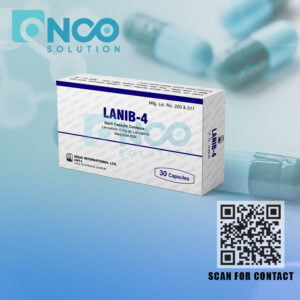
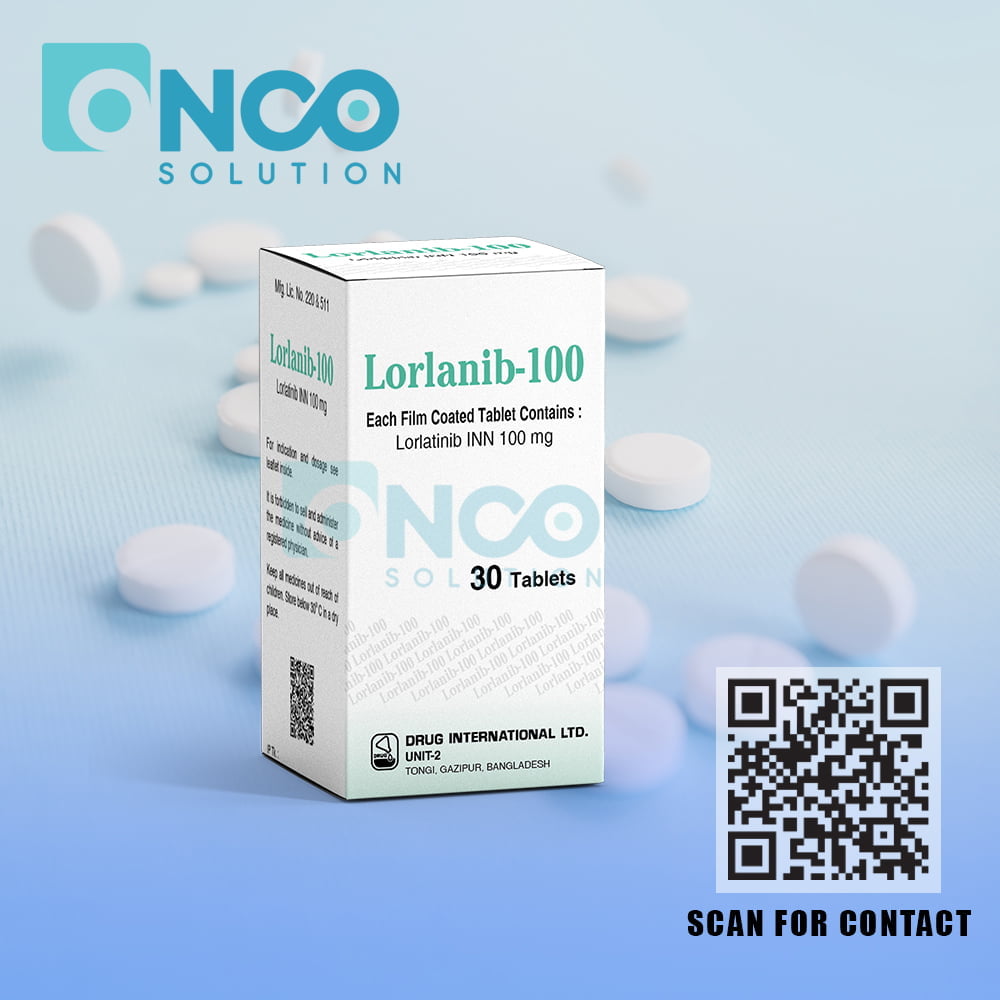
- Lorlanib — manufactured by Drug International Ltd. — available in 25 mg and 100 mg tablet strengths
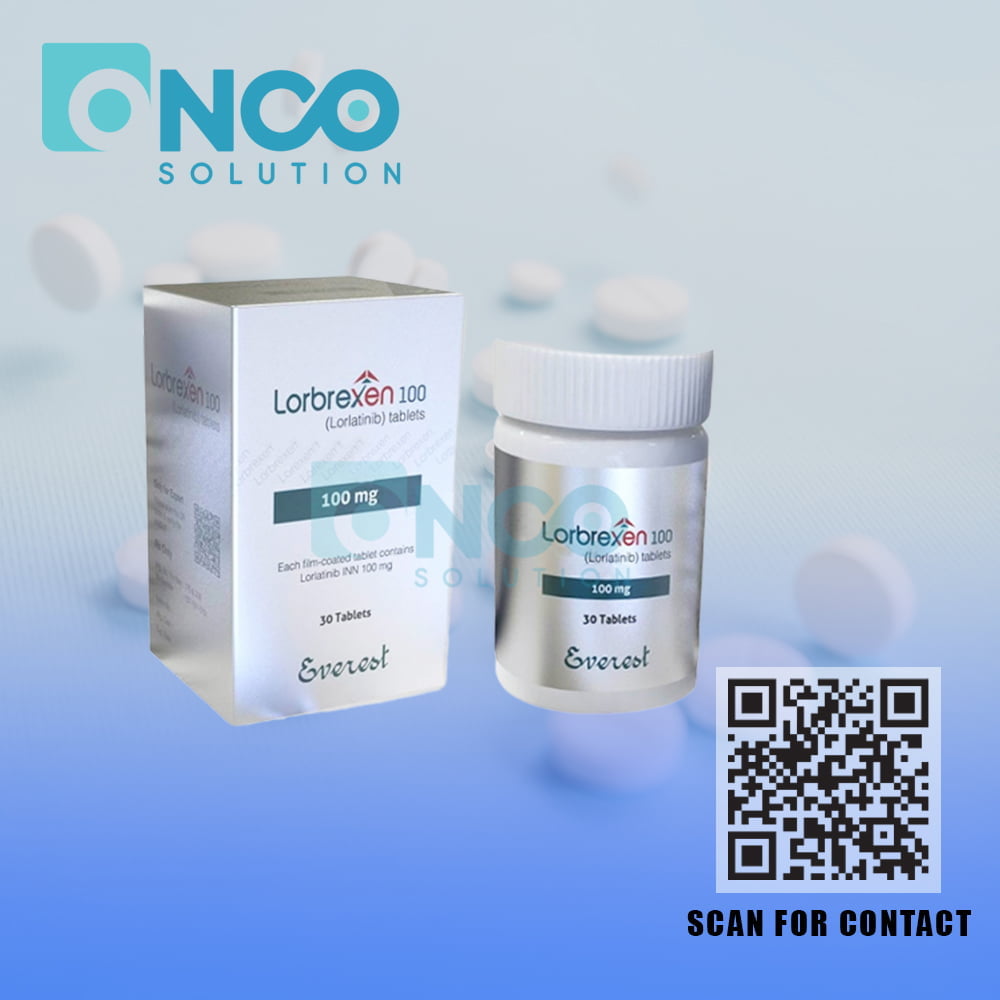
- Lorbrexen — manufactured by Everest Pharmaceutical Ltd. — available in 25 mg and 100 mg tablet strengths
For lorlatinib 100 mg supplier inquiries or requests for the 25 mg strength, please contact us directly through our procurement inquiry channel.
Key Safety Considerations and Drug Interactions
Lorlatinib carries a clinically significant safety concern related to hepatotoxicity. Concurrent use with potent CYP3A inducers is contraindicated due to the risk of serious hepatotoxicity. This contraindication is absolute and must be evaluated carefully during medication reconciliation before initiating therapy. Prescribers and clinical pharmacists should conduct a thorough review of a patient’s current medication regimen to identify any strong CYP3A inducers prior to lorlatinib use.
From a pharmacokinetic standpoint, lorlatinib is primarily metabolized via the CYP3A4 pathway. This metabolic route has implications for drug-drug interactions with other agents that inhibit or induce CYP3A4, and clinical teams should consult the full prescribing information for comprehensive interaction guidance.
Lorlatinib also has transporter-related interaction potential. It is an inhibitor of P-glycoprotein (P-gp) and activates the pregnane X receptor (PXR), with the net in vivo effect being induction. Additionally, lorlatinib inhibits OCT1, OAT3, MATE1, and intestinal BCRP transporters — interactions that may affect the plasma concentrations of co-administered drugs that are substrates of these transporters.
Regarding lactation, women should be advised not to breastfeed during treatment and for 7 days after the final dose. This guidance applies regardless of which brand — Lornatib, Lorlanib, or Lorbrexen — is being used, as the active pharmaceutical ingredient and its associated risks are consistent across formulations.
All clinical safety decisions, including management of interactions and adverse events, should be directed to the treating physician and guided by the official prescribing information.

Regulatory Approval and UAE Market Context
Lorlatinib received its initial regulatory approval from the U.S. Food and Drug Administration (FDA) in 2018, establishing a well-documented regulatory foundation for its use in metastatic ALK-positive NSCLC. This FDA approval serves as a globally recognized benchmark and is frequently referenced by regulatory authorities in other markets when evaluating the drug’s safety and efficacy profile.
In the United Arab Emirates, pharmaceutical imports are regulated by the Ministry of Health and Prevention (MOHAP), accessible at mohap.gov.ae. All pharmaceutical products imported into the UAE must comply with MOHAP’s registration, labeling, and import permit requirements. Buyers — including hospital procurement departments, licensed pharmaceutical distributors, and specialty pharmacies — are responsible for ensuring that any product they import meets current UAE regulatory standards.
Important regulatory notice: We do not make specific claims regarding the UAE local registration status of the Bangladeshi-manufactured brands Lornatib, Lorlanib, or Lorbrexen. UAE-based buyers should conduct their own due diligence with MOHAP and engage appropriate regulatory consultants to confirm import eligibility and registration requirements before placing procurement orders. We are available to provide product documentation to support the regulatory review process.
Bangladeshi Manufacturers: Lornatib, Lorlanib, and Lorbrexen
The lorlatinib brands we source and supply are manufactured exclusively in Bangladesh by three established pharmaceutical companies:
- Lornatib — manufactured by Ziska Pharmaceuticals Ltd. (Dhaka, Bangladesh). Ziska is a recognized Bangladeshi pharmaceutical manufacturer with a portfolio spanning oncology and other therapeutic areas.
- Lorlanib — manufactured by Drug International Ltd. (Bangladesh), a long-standing Bangladeshi pharmaceutical company with broad manufacturing capabilities and an established presence in the export market.
- Lorbrexen — manufactured by Everest Pharmaceutical Ltd. (Bangladesh), another Bangladeshi manufacturer contributing to the country’s growing oncology pharmaceutical output.
All three brands are formulated as oral tablets in both 25 mg and 100 mg strengths, consistent with the dosage forms available for lorlatinib. We supply exclusively these Bangladeshi-manufactured brands — we do not source or distribute brands manufactured in India or any other country outside Bangladesh.
For procurement teams familiar with the global originator context, Lorbrena is the reference brand under which lorlatinib was first developed and approved; the Bangladeshi brands above represent the formulations available through our supply channel for export to the UAE and other markets.
Sourcing Lorlatinib for the UAE: How to Place an Inquiry
We are a Bangladeshi pharmaceutical export supplier specializing in oncology medicines, and we export lorlatinib tablets — available as Lornatib, Lorlanib, and Lorbrexen — directly from Bangladesh to the United Arab Emirates. Our supply channel is designed to serve UAE-based pharmacies, hospital procurement teams, oncology centers, and licensed pharmaceutical distributors seeking a reliable source for this critical ALK-positive NSCLC therapy.
Whether you require the 25 mg or 100 mg tablet strength, or need documentation to support your regulatory and procurement processes, our team is equipped to assist. We do not publish pricing on this platform; all availability and pricing information is provided directly upon inquiry.
To initiate a procurement discussion, please use our contact form or designated inquiry channel. Our team will respond with product availability, lead times, and any supporting documentation required for your UAE import process.
Contact us for availability and pricing on Lornatib, Lorlanib, and Lorbrexen — lorlatinib 100 mg supplier inquiries welcome.
Frequently Asked Questions
What type of lung cancer is lorlatinib used to treat?
Lorlatinib is indicated for adult patients with metastatic non-small cell lung cancer (NSCLC) whose tumors are confirmed ALK-positive by an FDA-approved diagnostic test. It is a biomarker-driven therapy, meaning a positive ALK test result is required before treatment can begin. It is not indicated for NSCLC that lacks confirmed ALK positivity.
Why is companion diagnostic testing required before starting lorlatinib?
ALK positivity must be confirmed through an FDA-approved test because lorlatinib specifically targets the ALK kinase pathway, making it effective only in tumors that carry this genetic alteration. This testing requirement is both a clinical and regulatory prerequisite, not simply a procedural step. Initiating therapy without confirmed ALK-positive status falls outside the approved indication.
Are there any medications that cannot be taken with lorlatinib?
Yes — lorlatinib is contraindicated with potent CYP3A inducers due to the risk of serious hepatotoxicity, which is an absolute contraindication. Additionally, because lorlatinib inhibits transporters including P-gp, OCT1, OAT3, MATE1, and intestinal BCRP, co-administered drugs that are substrates of these transporters may have altered plasma concentrations. A thorough medication review by the treating physician or clinical pharmacist is essential before starting therapy.
Is lorlatinib safe to use while breastfeeding?
Women are advised not to breastfeed during treatment with lorlatinib and for 7 days after the final dose. This guidance applies regardless of which brand — Lornatib, Lorlanib, or Lorbrexen — is being used, as the active pharmaceutical ingredient and its associated risks are consistent across all formulations. Patients should discuss this with their treating physician before or during treatment planning.
Which Bangladeshi-manufactured lorlatinib brands do you supply for export to the UAE?
We supply three Bangladeshi-manufactured lorlatinib brands — Lornatib (by Ziska Pharmaceuticals Ltd.), Lorlanib (by Drug International Ltd.), and Lorbrexen (by Everest Pharmaceutical Ltd.) — all available in both 25 mg and 100 mg oral tablet strengths. We export these brands directly from Bangladesh to the United Arab Emirates and do not source or distribute brands manufactured outside Bangladesh. To request availability and pricing, please contact us through our procurement inquiry channel.
What documentation can you provide to support the UAE import and regulatory process?
We are able to provide product documentation to support the regulatory review process for UAE-based buyers, including materials that may assist with MOHAP import and registration requirements. UAE buyers are responsible for conducting their own due diligence with MOHAP and engaging appropriate regulatory consultants to confirm import eligibility. Please contact us directly to discuss the specific documentation your procurement or regulatory team requires.
- 1. www.accessdata.fda.gov
- 2. www.accessdata.fda.gov
- 3. www.accessdata.fda.gov
- 4. www.lorbrena.com
- 5. www.drugs.com
- 6. www.everestpharmabd.com
Access This Medicine Through oncosolution
We are a specialist oncology medicine supplier delivering to patients, pharmacies, hospitals, and distributors worldwide. Contact us for availability and sourcing support.
We do not publish prices online. All pricing is provided directly by our specialist supply team on request.
Medical Information Notice: This content is for informational purposes only and is based on official pharmaceutical product documentation. It does not constitute medical advice. Patients should consult their doctor or pharmacist before taking any medication.
Regulatory Disclaimer: Sourcing and distribution are subject to regional import regulations, quotas, and verified medical prescriptions where applicable. Pricing and availability are subject to change without notice.
Content Currency: This article was last reviewed and updated in July 2026. Regulatory approval statuses and product availability are subject to change; readers are advised to consult official regulatory databases for the most current information.